Behind every LIFE UP bag is careful selection, precise roasting and a commitment to freshness — because great coffee begins long before brewing.
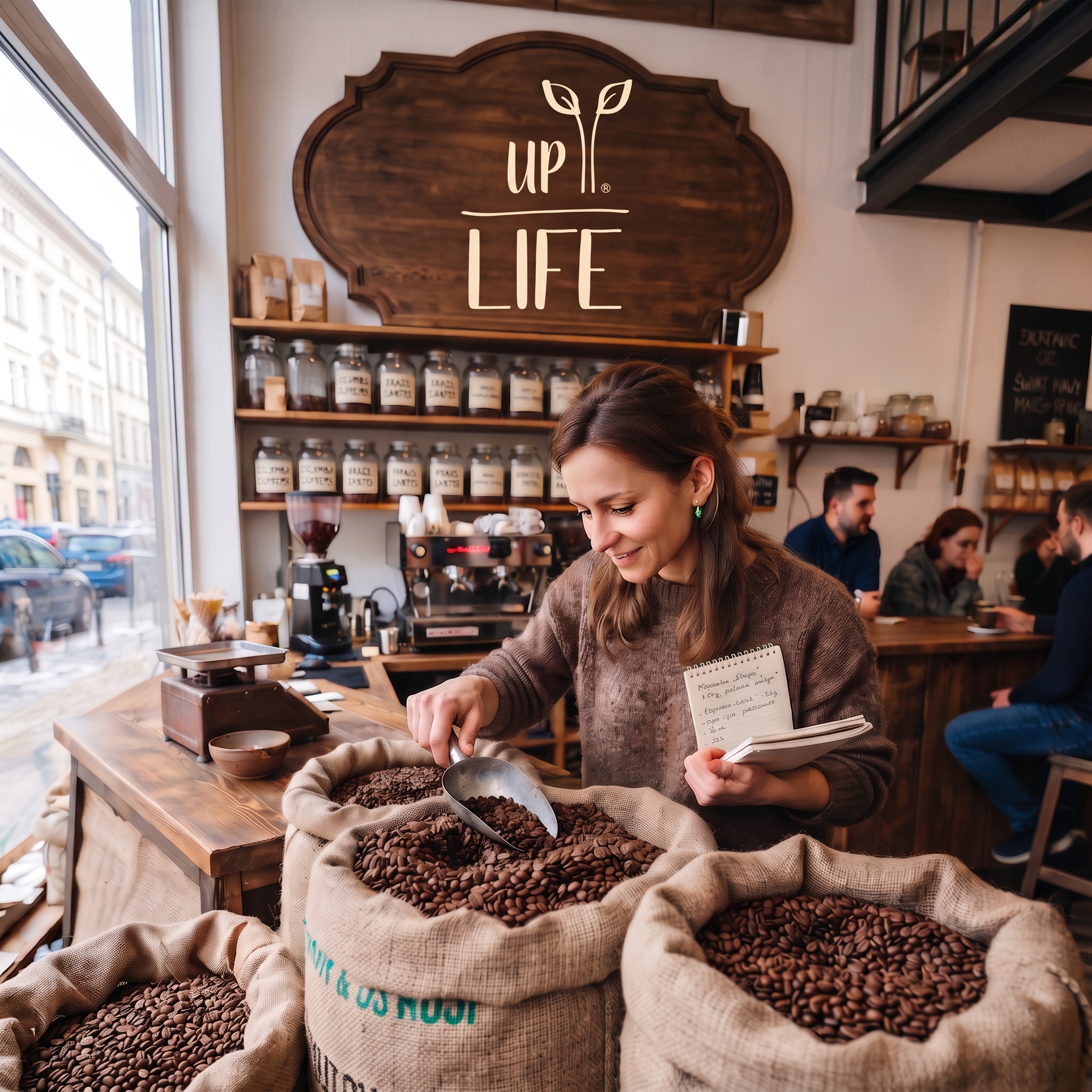
For our blends we select Arabica and Robusta beans in proportions matched to each blend's character. Arabica brings delicacy and aroma, Robusta brings strength and full body.
Arabica and Robusta are the two most widespread coffee species in the world — the differences between them show up from cultivation, through the look of the bean, to the flavor in your cup.
The most widely chosen coffee species in the world — and for good reason. It grows on steep mountain slopes, where fertile soil, frequent rainfall and strong sunshine create ideal ripening conditions. It's a demanding crop, so yields are much smaller than Robusta's. Plantations span the Americas, Africa and Asia, with Brazil and Colombia as the undisputed leaders in production.
It thrives where Arabica couldn't survive — in the lowlands, mainly across central and south-western Africa, Vietnam and India. It's hardier and more productive, and it packs up to three times more caffeine than Arabica. It's exactly what gives espresso that thick, velvety crema and the bold, unmistakable bitterness coffee lovers recognize instantly.
Every batch is roasted by hand, in small quantities, with full control over temperature and roasting time — to bring out the best possible flavor and aroma from the beans.
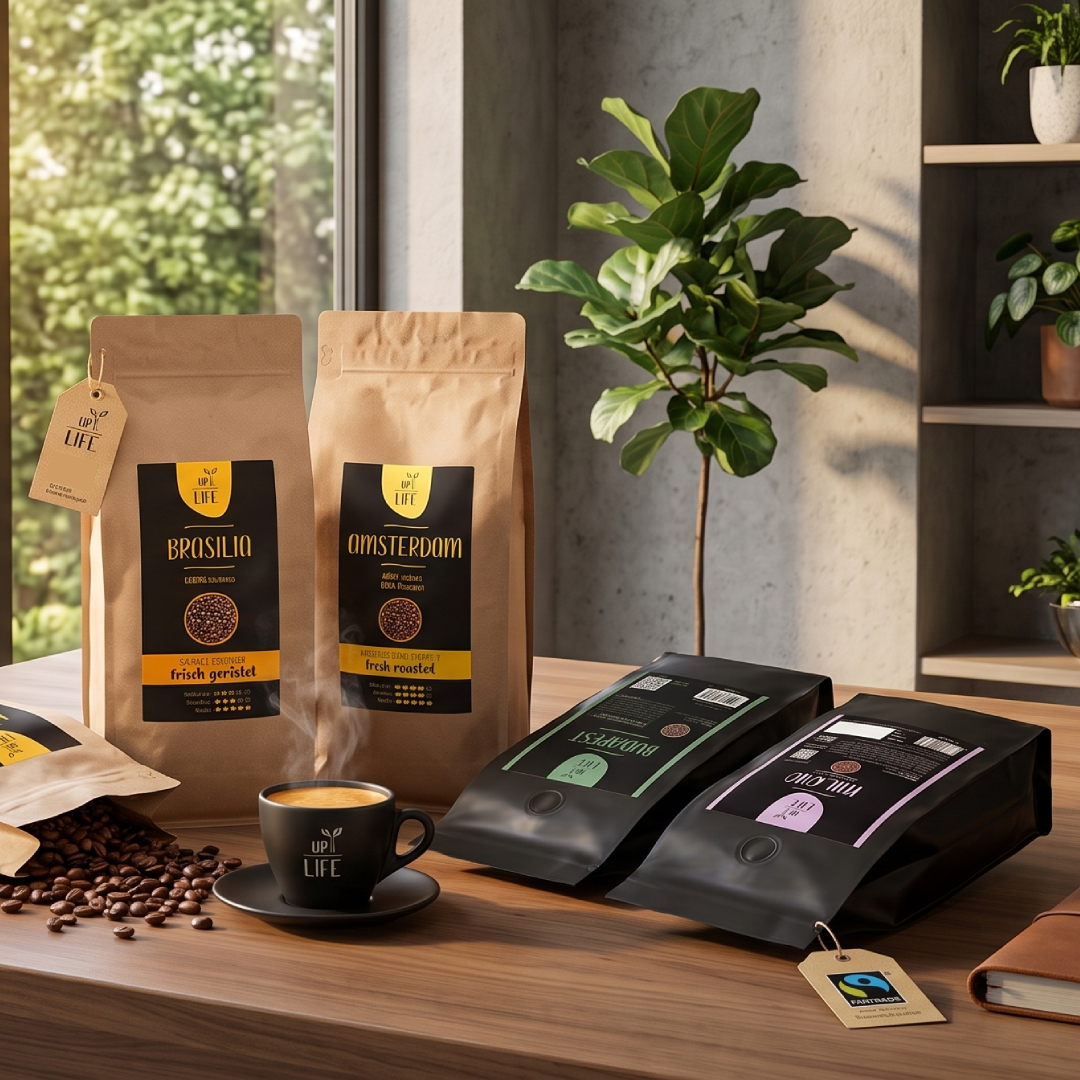
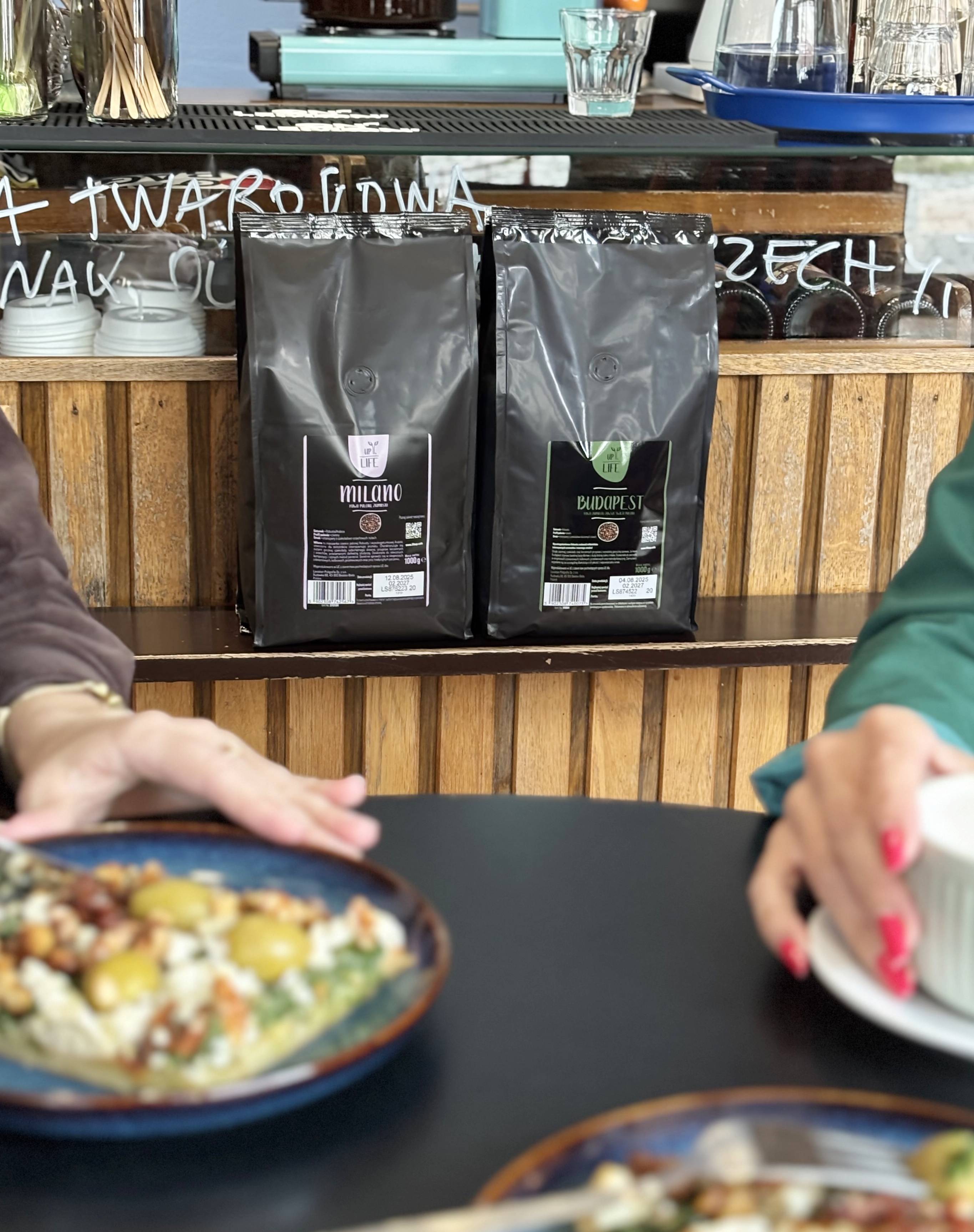
Our packaging is made in Poland, in a small coffee manufactory — with attention to every detail and stable, consistent quality in every batch.
Our blends work great in an espresso machine, a moka pot and milk-based coffees — just choose the right grind size.
Amsterdam — a strong, full-bodied espresso with a thick crema.
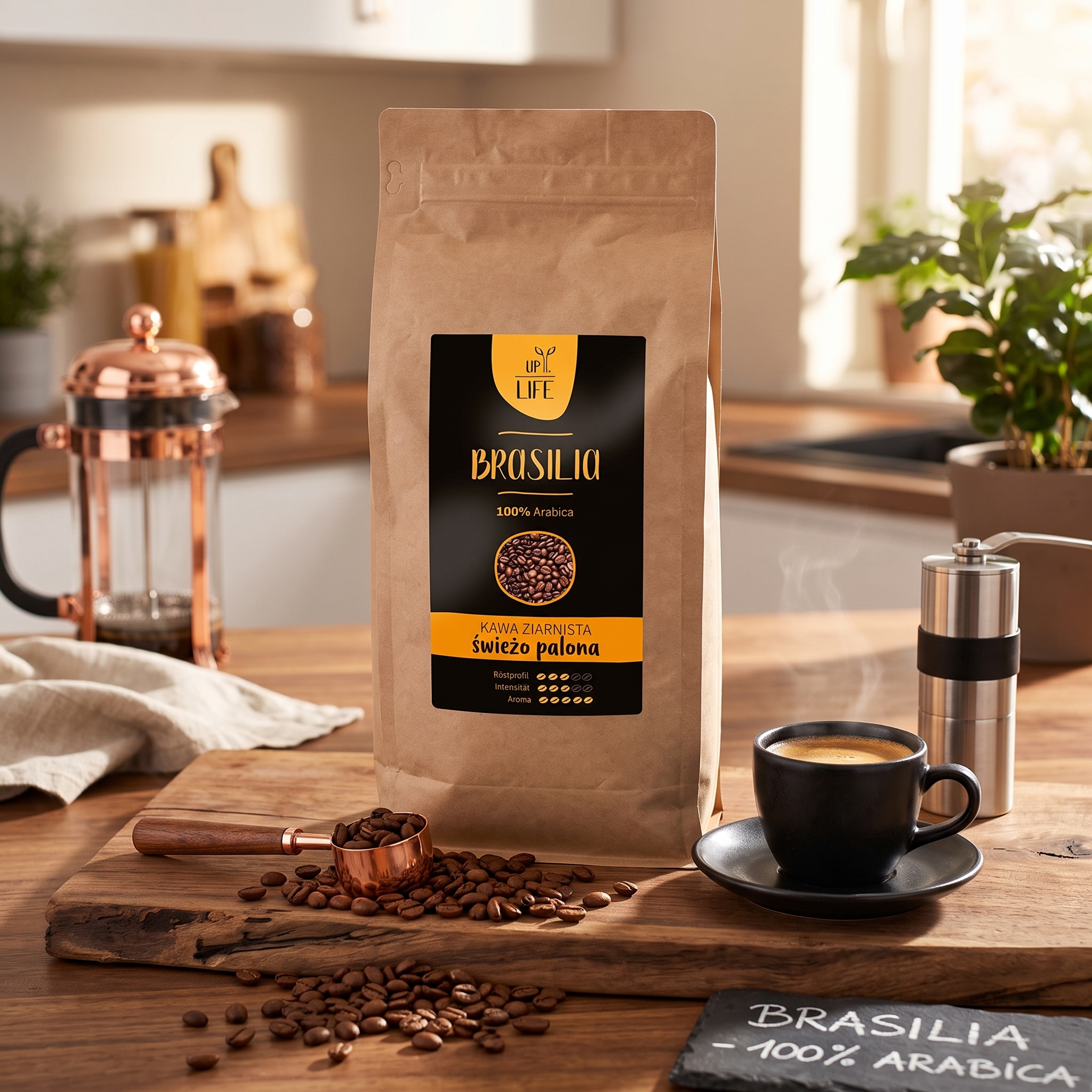
Brasilia — balanced flavor, perfect for everyday brewing.
Milano — intense, dark roasted, great for milk-based drinks.
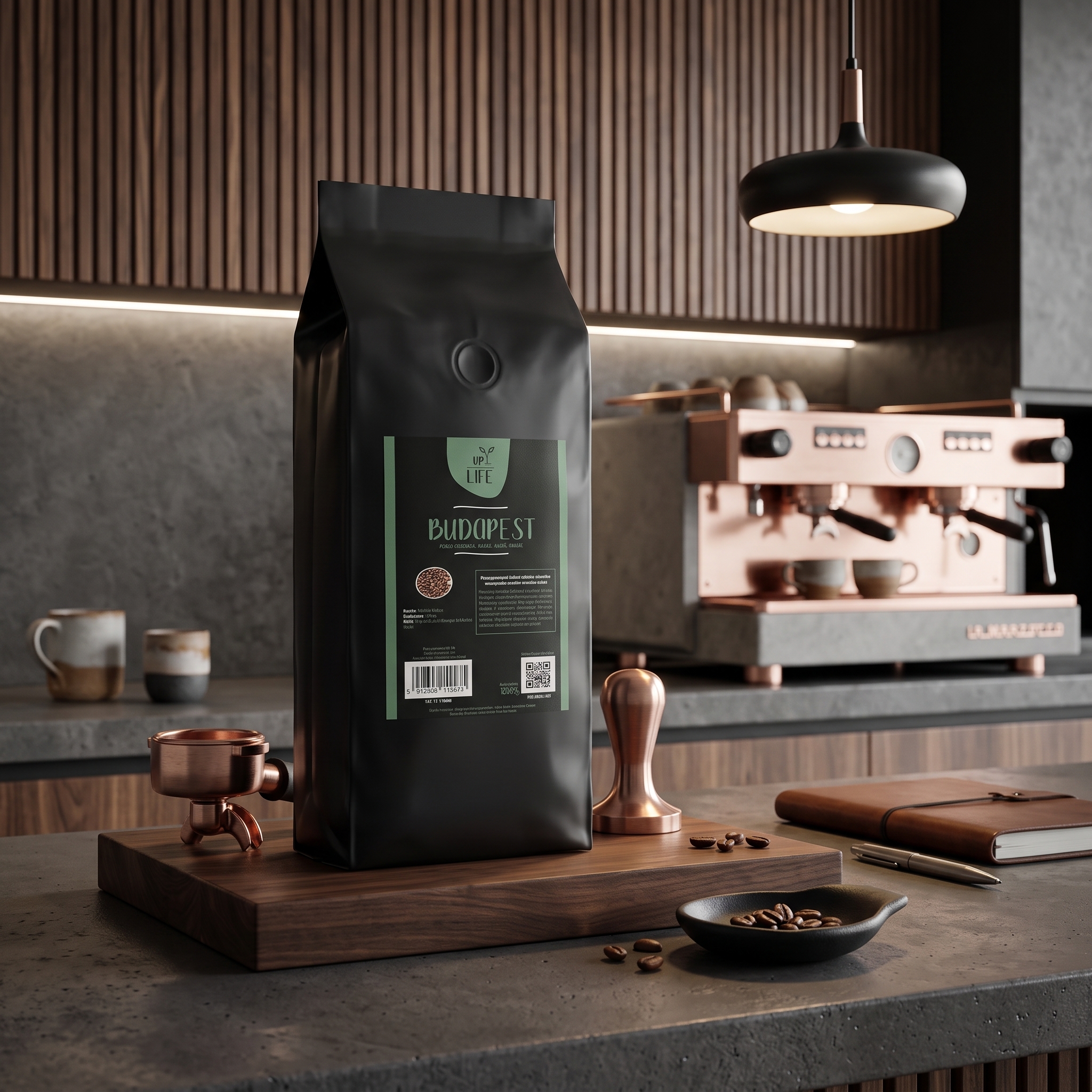
Budapest — rich, creamy body, made for crema and espresso.
We sell whole bean coffee in 1kg bags — grinding right before brewing is the best way to preserve the full aroma.
We recommend using the coffee within 4–6 weeks of opening and storing it in a sealed, dark place.
Yes — every LIFE UP bag has a resealable zipper, so you can open and close it as many times as you like. The aroma valve also lets you smell the coffee without tearing the bag open.
Acidity is a natural, desirable trait of coffee — much like in fruit — that enriches the flavor and balances sweetness with bitterness. Light roasts have the most of it. Sourness is something else entirely: an unpleasant, tart aftertaste caused by a defective bean or a flawed roasting process.
Freshly roasted beans taste best within the first 3 months after roasting. Buy only as much as you'll use in 1–2 weeks, store it in a sealed, dark place, and if you have a larger supply, split it into smaller portions or freeze it (only once) in an airtight container.
If you like strong, intense coffee — try Amsterdam, Milano or Budapest. If you prefer a milder, balanced flavor — choose Brasilia.
Yes — check out our offer for businesses with recurring deliveries and individual pricing.